
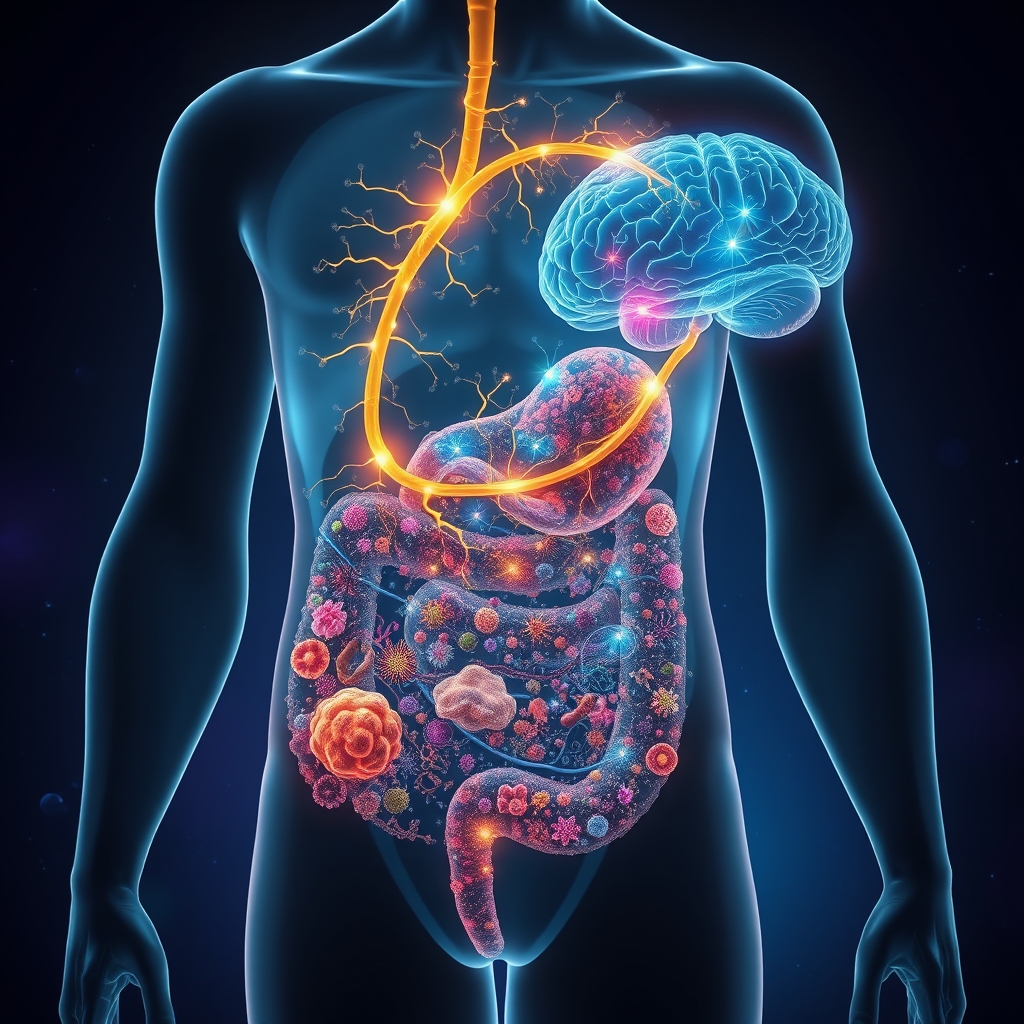
The air hums with the quiet symphony of trillions—tiny, unseen architects busily constructing the foundation of your well-being. They are not in some distant laboratory or hidden within the pages of a medical journal. They reside within you, in the warm, dark corridors of your gut, where a bustling metropolis of microorganisms thrives, shaping not just your digestion, but the very essence of how you think, feel, and perceive the world. This is the gut-brain axis, a revolutionary frontier in health science that is rewriting the rules of mental and emotional wellness.
The Invisible Conversation Inside You
Imagine, for a moment, a superhighway of communication stretching between your gut and your brain. This is not a metaphor—it is a biological reality. The vagus nerve, a long, meandering cable of neurons, acts as the primary conduit, ferrying messages back and forth in a constant, dynamic exchange. Your gut, often dismissed as a mere digestive organ, is in fact a second brain, teeming with over 100 million nerve cells that produce an astonishing 90% of your body’s serotonin, the neurotransmitter often dubbed the “happiness chemical.”
But the conversation doesn’t stop there. The microbes in your gut—collectively known as the microbiome—are active participants in this dialogue. They produce short-chain fatty acids like butyrate, which not only nourish the cells lining your intestines but also cross the blood-brain barrier, influencing everything from inflammation levels to neural plasticity. When this system is in harmony, it’s like a well-rehearsed orchestra, each instrument playing its part to create a masterpiece of balance and vitality. When it’s out of tune, however, the dissonance can manifest as anxiety, depression, brain fog, or even neurodegenerative diseases.
The Mood-Microbe Connection
Science is only beginning to unravel the profound ways in which our gut microbes shape our emotions. Studies have shown that people with depression often have less diverse microbiomes, with a notable depletion of certain beneficial bacteria like Lactobacillus and Bifidobacterium. In one groundbreaking experiment, researchers transplanted gut bacteria from depressed humans into rats, and the animals began exhibiting signs of anxiety and despair. The implications are staggering: could the key to mental health lie not just in therapy or medication, but in the food we eat and the environments we cultivate?
Emerging research suggests that probiotics—live beneficial bacteria—may hold the power to recalibrate this delicate balance. A study published in the journal Gastroenterology found that participants who consumed a probiotic-rich yogurt for four weeks showed reduced activity in brain regions associated with emotional processing, compared to those who didn’t. Another study in Nature Microbiology revealed that certain strains of gut bacteria could even influence social behavior, hinting at a future where probiotics might be prescribed alongside traditional treatments for autism or social anxiety.
Feeding Your Inner Ecosystem
If your gut is a garden, then the food you eat is the fertilizer that determines whether it flourishes or withers. A diet rich in fiber, fermented foods, and polyphenols—found in colorful fruits, vegetables, and spices—acts as fuel for your beneficial microbes, encouraging them to multiply and thrive. Think of sauerkraut, kimchi, kefir, and kombucha as love letters to your microbiome, each bite teeming with life and potential. On the flip side, a diet heavy in processed foods, sugar, and artificial additives is like pouring herbicide on your inner garden, starving the good bacteria and allowing harmful strains to take over.
But it’s not just about what you eat—it’s also about how you live. Chronic stress, poor sleep, and even antibiotics (while lifesaving) can disrupt the delicate equilibrium of your gut microbiome. The good news? You hold the power to restore balance. Mindfulness practices like meditation and deep breathing have been shown to reduce gut inflammation, while regular exercise increases microbial diversity. Even spending time in nature—surrounded by the microbes of the soil and plants—can enrich your inner ecosystem in ways we are only beginning to understand.
The Future of Mental Health is Personal
We stand on the precipice of a paradigm shift in how we approach mental and emotional well-being. The gut-brain axis challenges the long-held notion that the mind and body are separate entities, instead revealing them as intricately intertwined. Personalized medicine, fueled by advances in microbiome testing, is already allowing individuals to tailor their diets and lifestyles to their unique microbial profiles. Imagine a world where a simple stool sample could unlock the secrets to your mood, your energy, and your resilience—a world where the path to mental clarity begins not in a therapist’s office, but in your kitchen.
As we peel back the layers of this complex relationship, one truth becomes undeniable: we are not alone in our bodies. We are hosts to a vibrant, ever-evolving community of microbes that shape our health in ways we are only beginning to grasp. The next time you sit down to a meal, consider this: you are not just feeding yourself. You are nurturing an entire universe within, one that holds the key to your mind, your mood, and your future.
The whispers of your gut are not just background noise—they are the voice of your well-being, speaking in a language of balance, harmony, and vitality. And the more we listen, the more we realize that the path to a healthier mind might just begin with a healthier gut.
You may also like
-
The Whispering Winds of Wellness: How Fresh Air is the Unsung Architect of Your Health Sanctuary
-
The Luminous Link: How Light Exposure Beyond Sunrise is Painting a New Portrait of Health
-
The Symphony of Sleep: How Restorative Rest Conducts Your Health Masterpiece
-
The Golden Hour: How Morning Sunlight is the Ultimate Prescription for Vibrant Health
-
The Breath of Life: How Oxygen and Mindful Respiration Are Redefining Modern Wellness