
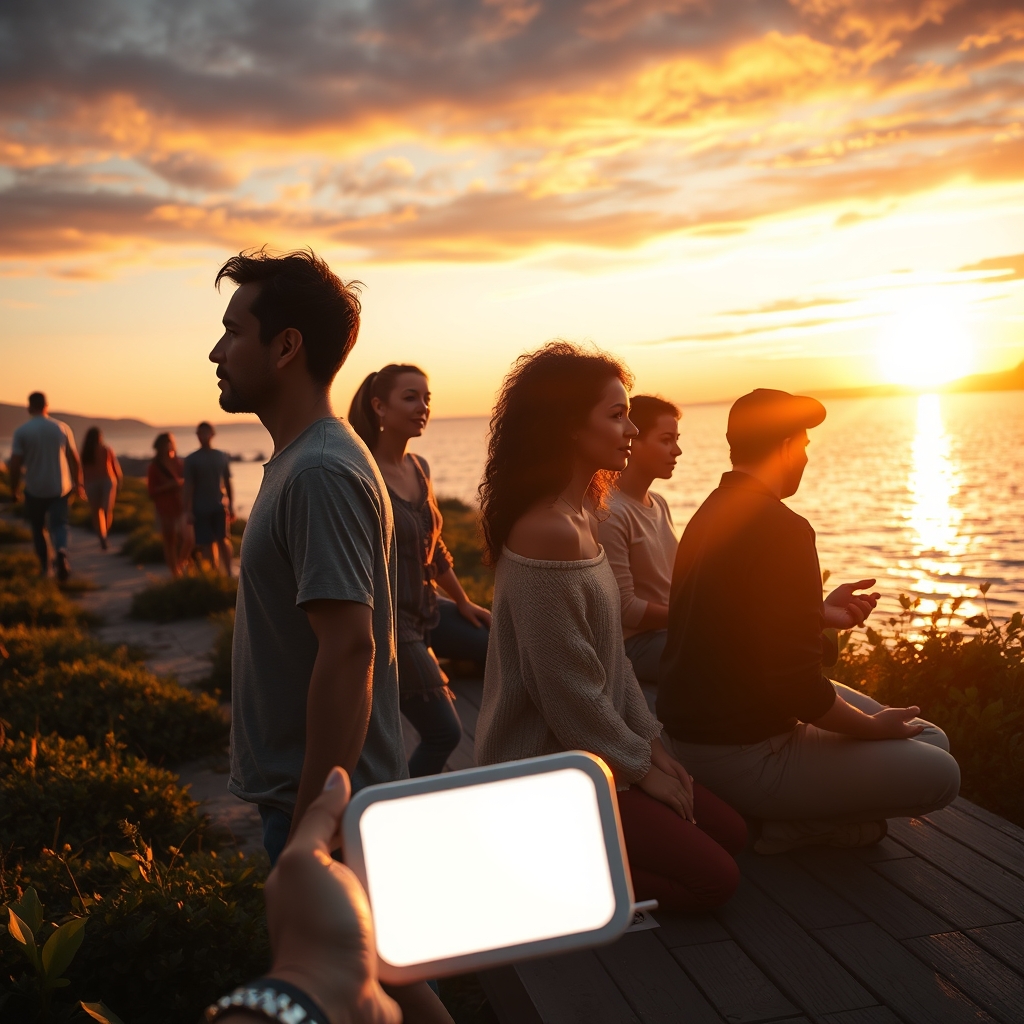
Imagine standing at the edge of a vast, shimmering ocean at dusk, the sky ablaze with hues of amber, crimson, and violet. The air is cool, the world is quiet, and something deep within you stirs—a primal recognition of the day’s gentle farewell. This is not just a poetic moment; it is a biological cue, a whisper from the cosmos telling your body that the time for winding down has arrived. Light, in all its forms and phases, is far more than a visual spectacle. It is a silent architect of our well-being, sculpting our sleep, mood, hormones, and even our longevity. While the golden hour of sunrise has long been celebrated as a cornerstone of health, the story of light’s influence on our bodies is far richer, more nuanced, and more profound than we ever imagined.
The Science of Light: A Dance with Our Circadian Rhythm
At the heart of light’s magic lies our circadian rhythm—the body’s internal clock that orchestrates a symphony of physiological processes over a 24-hour cycle. This rhythm is not merely a metaphor; it is a tangible, measurable force, governed by a tiny region in the brain called the suprachiasmatic nucleus (SCN). The SCN acts as a master conductor, synchronizing everything from our sleep-wake cycles to our metabolism, immune function, and cognitive performance. But here’s the catch: the SCN doesn’t work in isolation. It relies on external cues, primarily light, to stay in harmony with the natural world.
For millennia, humans evolved under the predictable cycle of sunlight and darkness. Our ancestors rose with the dawn, worked under the midday sun, and retreated as twilight descended. This rhythm was not just a matter of convenience; it was a survival mechanism, hardwired into our DNA. Fast forward to the modern era, and we’ve disrupted this ancient dance with artificial lighting, screen time, and erratic schedules. The consequences? A surge in sleep disorders, mood imbalances, and chronic diseases. But the tide is turning. Scientists are now uncovering how strategic light exposure—beyond just the morning sun—can recalibrate our circadian rhythm and restore balance to our lives.
The Morning Glow: More Than Just a Wake-Up Call
We’ve all heard about the benefits of morning sunlight—how it boosts vitamin D production, enhances mood, and sets the tone for the day. But the story doesn’t end there. Morning light, particularly the blue wavelengths, sends a powerful signal to the SCN, suppressing the sleep hormone melatonin and kickstarting our alertness. This is why stepping outside for even 10-15 minutes within an hour of waking can make such a profound difference in our energy levels and mental clarity. But what if we told you that the light you encounter later in the day could be just as transformative?
The Midday Boost: Harnessing the Power of Natural Brightness
Midday sunlight, often overlooked in favor of its softer morning and evening counterparts, is a powerhouse of health benefits. The intensity of light at this time of day—measured in lux—is significantly higher than in the early morning or late afternoon. This brightness is crucial for regulating our serotonin levels, the neurotransmitter responsible for mood, focus, and feelings of well-being. Studies have shown that exposure to bright light during the day can alleviate symptoms of depression, improve cognitive function, and even enhance productivity. For those who spend most of their day indoors, a short walk outside or positioning a workspace near a window can make all the difference. The key is to soak in as much natural light as possible, allowing your body to reap the rewards of this luminous elixir.
The Twilight Transition: Preparing for Restorative Rest
As the sun begins its descent, the quality of light shifts, casting a warm, golden glow that signals the approach of night. This transition is not just a visual delight; it is a biological imperative. The gradual reduction in blue light wavelengths triggers the production of melatonin, preparing our bodies for sleep. Unfortunately, modern life has blurred the lines between day and night. The blue light emitted by screens—smartphones, tablets, and computers—mimics the brightness of midday sun, tricking our brains into staying alert when we should be winding down. The result? A cascade of sleep disturbances, from difficulty falling asleep to fragmented rest and poor sleep quality.
But there’s hope. By mindfully reducing our exposure to artificial blue light in the evening, we can honor our body’s natural rhythms. Simple strategies, like dimming the lights an hour before bed, using blue light filters on devices, or even wearing amber-tinted glasses, can make a world of difference. And let’s not forget the magic of twilight itself. Spending time outdoors during this transitional period, whether through a leisurely walk or simply sitting on a porch, can reinforce our circadian rhythm and pave the way for deeper, more restorative sleep.
The Night Shift: The Role of Darkness in Health
In our quest to harness the power of light, we must not overlook the equally vital role of darkness. Just as light signals wakefulness, darkness is the cue for rest and repair. Our ancestors experienced true darkness—unpolluted by streetlights, screens, or the glow of cities. This darkness was not just the absence of light; it was a sanctuary for the body’s nocturnal processes, from cellular repair to memory consolidation. Today, light pollution has encroached upon this sacred space, disrupting our sleep and, by extension, our health.
Creating a sleep-friendly environment means embracing darkness as a non-negotiable part of our nightly routine. Blackout curtains, eye masks, and minimizing artificial light sources can help restore the natural balance. For those who struggle with insomnia or anxiety at night, the practice of “dark therapy”—spending time in complete darkness before bed—can be a game-changer. It’s a simple yet profound way to honor our body’s need for rest and rejuvenation.
Light as Medicine: The Future of Health and Well-Being
The emerging field of photobiology—the study of light’s effects on living organisms—is revolutionizing our understanding of health. Researchers are now exploring how specific wavelengths of light can be used to treat a range of conditions, from seasonal affective disorder (SAD) to chronic pain, wound healing, and even neurodegenerative diseases. Light therapy, once considered an alternative treatment, is now gaining recognition in mainstream medicine. Devices like light boxes, which emit bright, full-spectrum light, are being prescribed to combat depression, regulate sleep, and improve cognitive function. The possibilities are as vast as they are exciting, offering a glimpse into a future where light is not just a passive backdrop to our lives but an active participant in our well-being.
As we stand on the brink of this luminous revolution, it’s worth reflecting on the profound simplicity of light’s role in our lives. It is a force that has shaped our evolution, guided our rhythms, and nourished our bodies in ways we are only beginning to understand. By embracing the full spectrum of light—from the golden hues of dawn to the deep blues of midday and the soft embrace of twilight—we can reconnect with our natural rhythms and unlock a level of health and vitality we never thought possible. The journey begins with a single step outside, a moment of pause to soak in the sky’s ever-changing palette, and a commitment to letting light lead the way.
You may also like
-
The Whispering Winds of Wellness: How Fresh Air is the Unsung Architect of Your Health Sanctuary
-
The Symphony of Sleep: How Restorative Rest Conducts Your Health Masterpiece
-
The Golden Hour: How Morning Sunlight is the Ultimate Prescription for Vibrant Health
-
The Breath of Life: How Oxygen and Mindful Respiration Are Redefining Modern Wellness
-
The Rhythm of Resilience: How Circadian Science is Conducting Your Health Symphony