
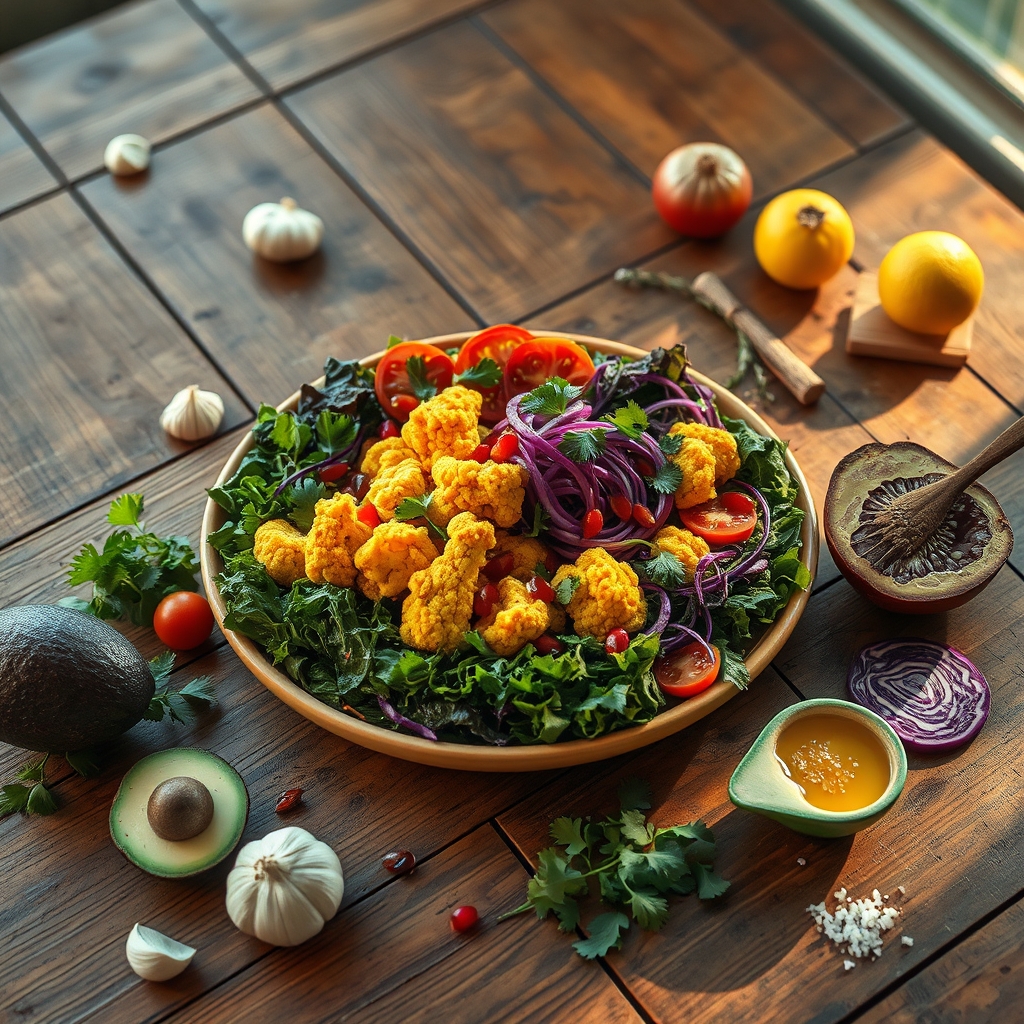
The act of nourishing ourselves is often reduced to a mere transaction—calories in, energy out—a mechanical exchange that overlooks the quiet poetry of the process. Yet, when we pause to observe, we realize that the food we choose is not just fuel; it is a palette of hues, textures, and flavors that paint the canvas of our days. Each meal is a brushstroke, a deliberate or unconscious choice that colors our moods, our energy, and even the contours of our thoughts. What if we began to see nutrition not as a rigid set of rules, but as an invitation to engage with the world—and ourselves—more deeply?
The Language of Color
There is a reason why the most vibrant meals are often the most nourishing. The deep greens of spinach and kale, the fiery reds of bell peppers and tomatoes, the golden yellows of turmeric and squash—these colors are not just visually appealing; they are nature’s way of signaling the presence of phytonutrients, antioxidants, and vitamins that our bodies crave. A plate devoid of color is often a plate devoid of life, a silent testament to the monotony of processed foods that offer little beyond empty calories. But when we fill our plates with the spectrum of the earth’s bounty, we are not just feeding our bodies; we are feeding our senses, our curiosity, and our connection to the natural world.
Consider the way a ripe peach feels in your hand—its fuzzy skin warm from the sun, its juice running down your fingers as you take a bite. Or the way a bowl of berries glistens under the morning light, each one a tiny jewel promising sweetness and vitality. These moments are not incidental; they are the language of nourishment, a dialect spoken in the quiet interplay of color, texture, and taste. To eat mindfully is to listen to this language, to let it guide us toward choices that honor both our physical and emotional hungers.
The Ritual of Preparation
In our haste, we often forget that the act of preparing food is as nourishing as the food itself. The chopping of vegetables, the stirring of a simmering pot, the kneading of dough—these are not just tasks to be rushed through; they are rituals that ground us in the present moment. There is a meditative quality to cooking, a rhythm that syncs our breath with the motion of our hands, our thoughts with the ingredients before us. When we cook with intention, we infuse our meals with more than just nutrients; we infuse them with care, with love, and with a piece of our own presence.
Think of the last time you cooked a meal from scratch. Perhaps it was a simple dish—a pot of soup, a loaf of bread—but in that act of creation, you were not just feeding your body; you were feeding your soul. The aroma of garlic sizzling in olive oil, the sound of onions softening in a pan, the sight of dough rising under a warm cloth—these are the sensory details that transform cooking from a chore into a sacred act. They remind us that nourishment is not just about what we eat, but how we engage with the process of eating.
The Emotional Echo of Food
Food is never just food. It carries with it the weight of memory, the echo of emotion, the imprint of culture. A bowl of soup might remind us of a grandmother’s kitchen, the warmth of her hands as she ladled it into our bowl. A slice of cake might transport us to a childhood birthday, the laughter of friends still lingering in the air. These emotional echoes are not distractions from the act of nourishment; they are integral to it. They remind us that eating is not just a biological necessity, but a deeply human experience, one that connects us to our past, our loved ones, and even our future selves.
Yet, in our pursuit of health, we sometimes forget this emotional dimension. We count macros and calories, but we overlook the way food makes us feel—not just physically, but emotionally and spiritually. A diet that nourishes the body but starves the soul is no diet at all. True nourishment requires a balance, a harmony between the practical and the poetic, the scientific and the sentimental. It asks us to consider not just what we are eating, but why we are eating it, and how it makes us feel.
The Whispers of Hunger
Hunger is not a monolith. It is a nuanced language, a series of whispers that our bodies use to communicate their needs. There is the sharp pang of physical hunger, the gnawing emptiness that demands to be filled. But there is also the quiet ache of emotional hunger, the longing for comfort, for connection, for something that no amount of food can truly satisfy. Learning to distinguish between these hungers is one of the most profound acts of self-care we can undertake. It requires us to listen—to our bodies, to our emotions, to the subtle cues that often go unnoticed in the rush of daily life.
When we pause to listen, we might realize that what we crave is not a bag of chips or a pint of ice cream, but a moment of stillness, a conversation with a friend, a walk in the fresh air. These are the things that truly nourish us, the things that feed not just our bodies, but our souls. And when we begin to honor these deeper hungers, we find that our relationship with food shifts. It becomes less about restriction and more about exploration, less about guilt and more about gratitude.
The Canvas of Our Days
Every meal is an opportunity—a chance to nourish not just our bodies, but our entire beings. The colors we choose, the care we put into preparation, the emotions we bring to the table—all of these elements come together to create a tapestry of nourishment that extends far beyond the plate. It is a tapestry woven from the threads of our choices, our memories, our intentions, and our presence. And like any work of art, it is never truly finished; it evolves with us, reflecting the changes in our lives, our bodies, and our souls.
So the next time you sit down to eat, take a moment to observe the palette before you. Notice the colors, the textures, the way the light plays across the surface of your food. Consider the hands that prepared it, the earth that grew it, the journey it took to reach your plate. And as you take your first bite, let yourself be fully present—not just to the taste, but to the experience of nourishment in all its forms. For in that moment, you are not just eating; you are creating. You are painting the canvas of your days with every choice, every bite, every breath.
The colors on our plates are more than just pigments; they are the hues of our well-being, the shades of our vitality, the tones of our connection to the world around us. And when we learn to see them as such, we begin to understand that nourishment is not just something we do—it is something we live.
You may also like
-
The Hidden Dialogue: How Our Plates Speak in the Language of Longing and Fulfillment
-
The Breath Between Bites: How Nourishment Becomes a Sacred Pause in the Rush of Living
-
The Dance of Nourishment: How Each Choice Composes the Melody of Our Days
-
The Echoes of Nourishment: How the Food We Choose Resonates Through Time
-
The Alchemy of Attention: How the Hands That Feed Us Shape the Soul We Become