
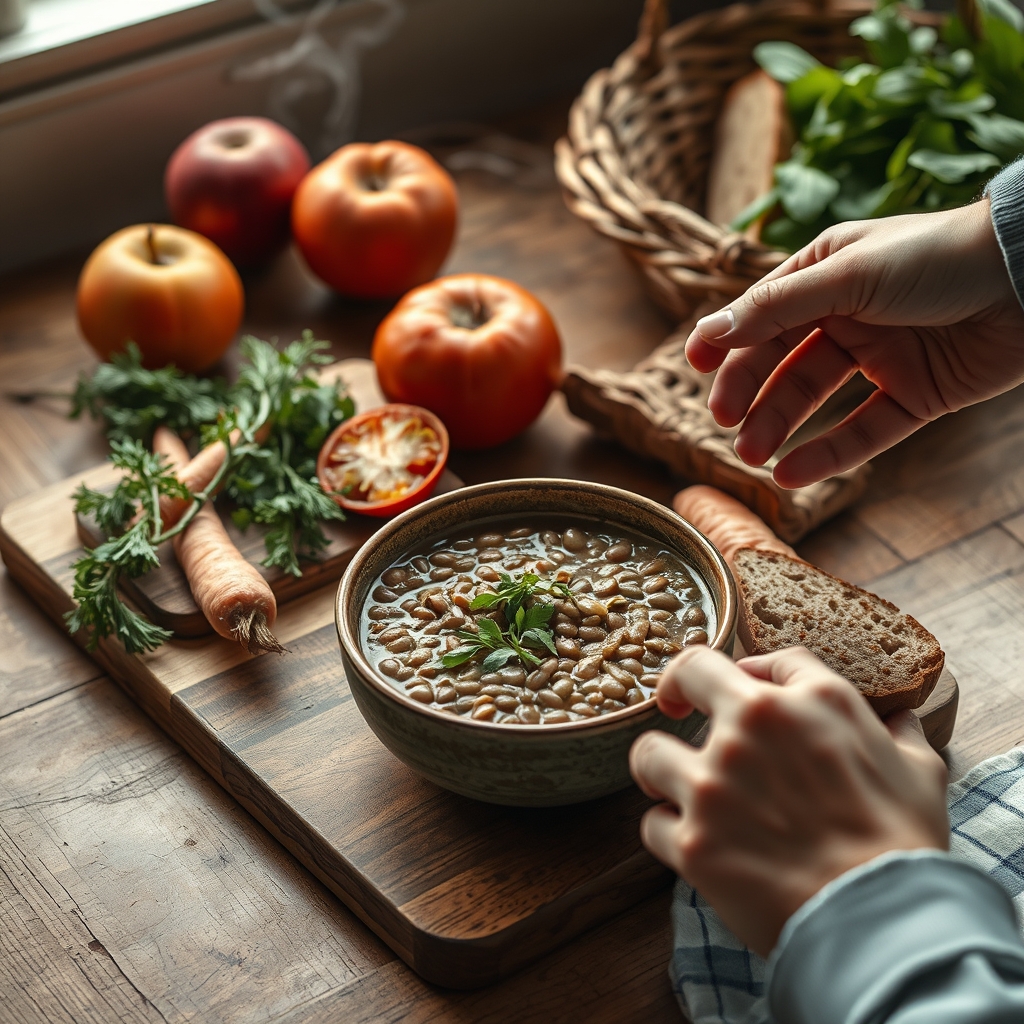
The first time I truly tasted an apple, I was twenty-three years old. Not the crisp, sweet crunch of childhood snacks, but the slow, deliberate unraveling of its essence—how the skin resisted just enough to make me pause, how the flesh yielded like a secret, how the juice lingered on my tongue like a half-remembered dream. It was not hunger that led me to this moment, but a quiet curiosity, a desire to understand what it meant to nourish not just the body, but the self.
The Alchemy of Attention
Nutrition, in its most reductive form, is a science of numbers: calories, macros, vitamins, minerals. We count, measure, and optimize, as if the body were a machine to be fine-tuned rather than a living, breathing poem. But what if we allowed ourselves to see it differently? What if we approached our plates not as spreadsheets of sustenance, but as canvases where every color, texture, and flavor tells a story?
Mindful eating is not a trend; it is a homecoming. It is the act of returning to the present moment, where the clatter of forks and the hum of conversation fade into the background, and all that remains is the quiet dialogue between you and what you consume. The first bite is an invitation. The second, a conversation. By the third, you are no longer just eating—you are listening.
The Language of Ingredients
Consider the humble carrot, pulled from the earth with its feathery green top still attached. It is not just a source of beta-carotene; it is a whisper from the soil, a testament to the sun’s embrace and the rain’s patience. When we peel back its layers, we are not just preparing a meal—we are participating in a ritual older than time. The knife becomes a pen, the cutting board a page, and every slice a verse in the narrative of our lives.
This is the poetry of plates: the way a ripe tomato bursts with summer’s memory, how a pinch of salt can sharpen the sweetness of a peach, how the warmth of a bowl of soup can feel like an embrace on a cold day. These are not mere ingredients; they are characters in the story of who we are. To eat with intention is to acknowledge that every bite carries the weight of history, culture, and connection.
The Body as a Garden
We speak of nourishment as if it were a one-way transaction—food in, energy out. But the body is not a bank; it is a garden. What we plant, it grows. What we neglect, it withers. The foods we choose are not just fuel; they are seeds, each one holding the potential to bloom into vitality or decay into dis-ease.
Think of the last time you ate something that made you feel truly alive. Was it the vibrant crunch of a salad, the creamy richness of avocado, or the comforting warmth of oatmeal? Now think of the last time you ate out of habit, or boredom, or stress—how the food sat in your stomach like a stone, heavy and unyielding. The difference is not just in the nutrients; it is in the relationship. When we tend to our bodies with care, we are not just feeding ourselves—we are cultivating a landscape where health, joy, and resilience can take root.
The Ritual of Preparation
There is a sacredness in the act of preparing food. The chopping of onions, the stirring of a simmering pot, the way the scent of garlic fills the kitchen like incense—these are not just steps in a recipe. They are meditations, moments where time slows and the mind settles. The kitchen becomes a sanctuary, and the meal, a prayer.
I once spent an afternoon making a pot of lentil soup from scratch, my hands moving almost of their own accord as I peeled and diced, stirred and tasted. There was no recipe, just memory and intuition. When I finally sat down to eat, the soup was more than nourishment; it was a love letter to myself, a reminder that I am worthy of time, care, and attention. That meal did not just fill my stomach; it fed my soul.
The Unseen Threads of Connection
Food is never just about the individual. It is a thread that weaves through families, communities, and generations. The recipe passed down from a grandmother, the shared meal with friends, the farmers who grew the produce—all of these are part of the story. When we eat, we are not just consuming nutrients; we are participating in a web of connection that stretches across time and space.
There is a reason why breaking bread together has always been a symbol of unity. It is because food is not just about survival; it is about belonging. The table is where we gather, not just to eat, but to be seen, to be heard, to be held. In a world that often feels fragmented, the act of sharing a meal is a small but powerful act of resistance—a reminder that we are not alone.
And so, the next time you sit down to eat, I invite you to pause. To look at your plate not as a means to an end, but as a moment of grace. To taste not just with your mouth, but with your heart. To remember that every bite is a line in the story of you, a brushstroke in the masterpiece of your life. The poetry of plates is not just in what you eat, but in how you choose to savor it—slowly, deeply, and with all the attention it deserves.
You may also like
-
The Whispering Palette: How the Colors on Our Plates Paint the Canvas of Our Well-Being
-
The Hidden Dialogue: How Our Plates Speak in the Language of Longing and Fulfillment
-
The Breath Between Bites: How Nourishment Becomes a Sacred Pause in the Rush of Living
-
The Dance of Nourishment: How Each Choice Composes the Melody of Our Days
-
The Echoes of Nourishment: How the Food We Choose Resonates Through Time