
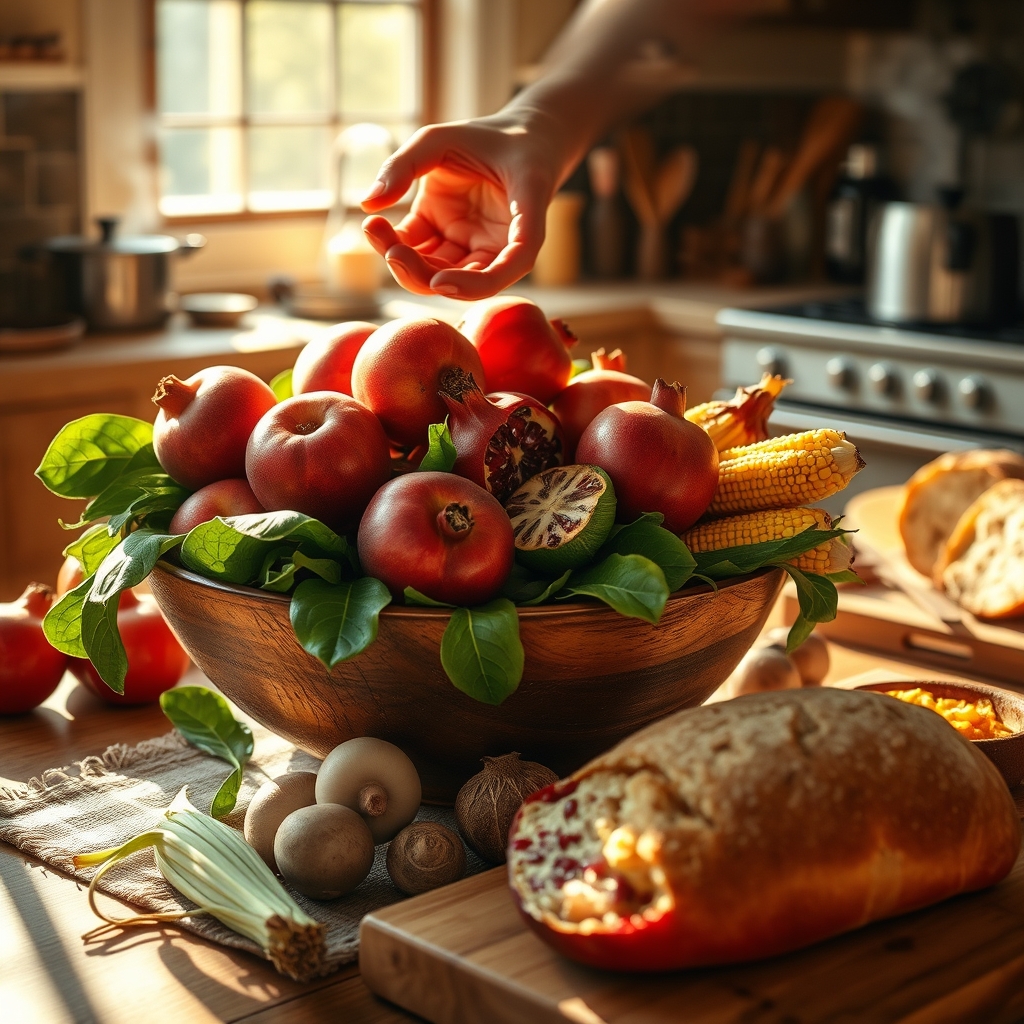
The act of eating is often reduced to a mechanical necessity, a fleeting transaction between hunger and satiety. Yet, if we pause to listen, the food we consume speaks in a luminous language—a dialect of colors, textures, and flavors that narrate stories older than memory itself. To nourish is not merely to fill; it is to engage in a dialogue with the earth, with time, with the quiet alchemy of transformation that turns sunlight into sustenance, soil into life.
The Palette of Nourishment
Consider the first bite of a ripe peach, its juice a golden elixir that spills over fingers and tongue like liquid sunlight. The peach did not arrive at this moment by accident. It is the culmination of seasons—of rain that kissed the roots, of bees that danced between blossoms, of hands that tended and harvested. When we eat, we partake in this continuum, becoming temporary vessels for the energy that has flowed through the land. The colors of our meals are not just visual delights; they are the earth’s way of signaling its gifts. The deep crimson of a pomegranate whispers of antioxidants, the emerald green of spinach hums with iron, the warm orange of a sweet potato sings of beta-carotene. To eat mindfully is to read these signs, to let the palette of nourishment guide us toward balance.
The Texture of Time
There is a rhythm to nourishment that mirrors the cadence of life itself. The slow simmer of a stew, the patient rise of dough, the gradual ripening of fruit—these are not just culinary processes but meditations on time. In a world that often demands haste, the act of preparing and savoring food can become an act of resistance, a way to reclaim the lost art of lingering. The texture of a meal, too, tells a story. The crispness of a freshly baked loaf, the silkiness of avocado, the tender give of a perfectly cooked grain—each sensation is a brushstroke in the larger canvas of our sensory experience. To rush through a meal is to miss the nuances, the subtle shifts in temperature, the way flavors unfold like petals in the warmth of the mouth.
The Alchemy of Flavor
Flavor is the most intimate form of communication between the earth and our bodies. It is the language through which our cells recognize what they need, what will heal, what will sustain. The bitterness of dark leafy greens, the umami depth of mushrooms, the bright acidity of citrus—these are not just tastes but messages, encoded with wisdom about what our bodies crave. Yet, in our modern world, we have dulled this dialogue, drowning out the earth’s whispers with the clamor of processed foods, artificial sweeteners, and empty calories. To reconnect with the alchemy of flavor is to relearn the art of listening—to our bodies, to the land, to the quiet intelligence that has guided humans for millennia.
The Ritual of Nourishment
There is a sacredness in the act of eating that transcends the physical. It is present in the way a family gathers around a table, in the way a solitary meal can become a moment of solace, in the way a shared dish can bridge cultures and histories. Rituals of nourishment—whether it’s the slow pouring of tea, the breaking of bread, or the mindful arrangement of a plate—are not mere traditions. They are anchors, grounding us in the present and reminding us that food is more than fuel. It is memory, it is connection, it is love made tangible. When we eat with intention, we honor not just our bodies but the web of relationships that brought the food to our plates.
The Unseen Threads of Nourishment
What we eat is only part of the story. The unseen threads of nourishment weave through the soil, the hands that harvest, the markets that distribute, the cultures that shape our palates. To nourish ourselves is to acknowledge these threads, to recognize that our choices ripple outward, touching lives and landscapes we may never see. The farmer who tended the fields, the bee that pollinated the flowers, the rain that nourished the crops—all are part of the unseen tapestry that sustains us. When we choose foods that are grown with care, that are seasonal and local, we align ourselves with this tapestry, becoming stewards of a cycle far greater than ourselves.
In the end, nourishment is not just about what we put into our bodies but about how we engage with the world. It is a practice of presence, a way of saying yes to life in all its complexity and beauty. The next time you sit down to eat, pause for a moment. Listen to the whispers of the food before you. Taste the stories it carries. Let it remind you that to nourish is to participate in something sacred—a dance of give and take, of receiving and giving back, that has been unfolding since the first seed was planted in the earth.
You may also like
-
The Whispering Palette: How the Colors on Our Plates Paint the Canvas of Our Well-Being
-
The Hidden Dialogue: How Our Plates Speak in the Language of Longing and Fulfillment
-
The Breath Between Bites: How Nourishment Becomes a Sacred Pause in the Rush of Living
-
The Dance of Nourishment: How Each Choice Composes the Melody of Our Days
-
The Echoes of Nourishment: How the Food We Choose Resonates Through Time