
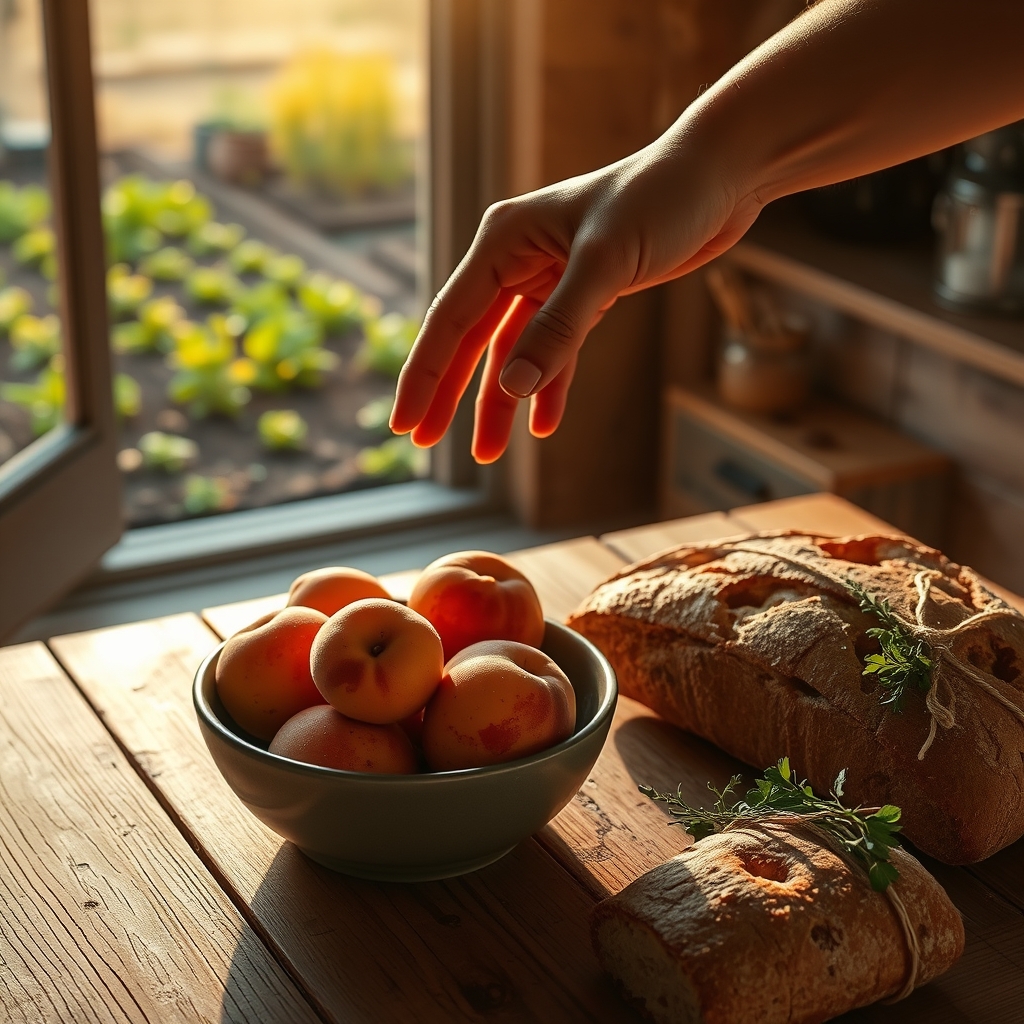
The first light of dawn spills across the kitchen counter, gilding the edges of a bowl of ripe peaches, their skins blushing like the cheeks of someone caught in a secret. There is a quiet magic in the way food arrives at our tables—how the earth, in its infinite patience, coaxes life from seed to stem, from blossom to fruit. To eat is to participate in this alchemy, yet how often do we pause to listen to the stories our meals carry? The language of nourishment is not spoken in calories or macros, but in the slow, deliberate poetry of growth, harvest, and the hands that tend to both soil and soul.
The Soil Remembers
Before the knife meets the cutting board, before the oil sizzles in the pan, there is the soil. It is easy to forget that every bite we take is a conversation with the earth—a dialogue written in minerals, rain, and the tender persistence of roots. The tomatoes that burst with summer’s sweetness, the kale that stands resilient through frost, the grains that sway in golden fields like a chorus of sunlit voices—each carries the memory of the land from which it sprang. When we choose foods that are grown with care, we are not just feeding our bodies; we are honoring the soil’s quiet labor, its generosity, its refusal to be rushed.
There is a wisdom in eating seasonally, in allowing the rhythm of the natural world to guide our plates. The first strawberries of spring taste like a promise, while the pumpkins of autumn arrive heavy with the weight of the year’s turning. To eat in harmony with the seasons is to align ourselves with the earth’s breath, to remember that we, too, are part of this cyclical dance. It is a practice of humility, a way of saying: I am listening.
The Hands That Feed Us
Behind every meal, there are hands—calloused, steady, or swift—that have shaped what we eat. The farmer who rises before the sun to tend to the fields, the baker who kneads dough with the weight of tradition in their wrists, the fisherman who navigates the dark, restless sea. These hands are the unsung poets of our sustenance, their stories woven into the very fibers of our food. When we take a bite, we are not just consuming nutrients; we are ingesting their labor, their love, their quiet devotion to the craft of feeding others.
To eat mindfully is to acknowledge these hands, to trace the journey of our food back to its origins. It is to ask: Who grew this? Who harvested it? Who prepared it with care? In a world where meals are often reduced to convenience, this act of remembrance is a radical one. It is a way of saying: I see you. I am grateful for you. And in that gratitude, we find a deeper connection—not just to our food, but to the web of lives that make it possible.
The Body as a Garden
Our bodies, too, are gardens—complex, ever-changing landscapes that respond to the care we give them. The foods we choose are like seeds planted in this inner soil, each one holding the potential to nourish or deplete, to heal or harm. There is no universal script for what this garden should look like; it is as unique as the person tending it. Some may thrive on the crisp bite of an apple, while others find solace in the warmth of a bowl of soup. The key is not in rigid rules, but in learning to listen—to the subtle cues of hunger and fullness, to the whispers of craving and satisfaction, to the quiet wisdom of the body itself.
This listening is not always easy. In a world that bombards us with messages about what we should eat, it can be difficult to hear our own inner voice. But when we slow down, when we approach our meals with curiosity rather than judgment, we begin to notice the nuances. The way a handful of almonds staves off the afternoon slump, the way a cup of chamomile tea soothes the frayed edges of a long day, the way a shared meal with loved ones fills not just the stomach, but the heart. These are the moments that teach us what true nourishment feels like.
The Alchemy of Attention
There is a reason why a meal eaten in haste tastes different from one savored slowly. When we rush, we miss the symphony of flavors, the dance of textures, the way a single bite can unfold like a story on the tongue. To eat with attention is to transform the act of nourishment into something sacred. It is to recognize that every meal is an opportunity to reconnect—not just with our bodies, but with the world around us.
This alchemy of attention begins with the simplest of acts: putting down the phone, turning off the screens, and allowing ourselves to be fully present. It is in the steam rising from a bowl of rice, in the crunch of a carrot between the teeth, in the way a sip of water can feel like a benediction. These are the small, ordinary miracles that remind us: nourishment is not just about what we eat, but how we eat. It is about the space we create for the meal, the intention we bring to the table, the reverence we offer to the act of feeding ourselves.
The earth does not rush its harvest, nor should we rush our meals. There is a quiet power in sitting with a plate of food, in allowing it to speak to us in its own time. The flavors deepen, the textures reveal themselves, and suddenly, the act of eating becomes a meditation—a practice of presence, of gratitude, of love. In these moments, we are not just consuming; we are communing. We are remembering that to nourish ourselves is to honor the intricate, beautiful web of life that sustains us, one bite at a time.
And so, the next time you sit down to eat, take a breath. Let your senses awaken. Listen to the language of your food, to the stories it carries, to the hands and the soil and the seasons that brought it to you. For in that listening, you will find not just nourishment, but a deeper understanding of what it means to be alive—to be part of this vast, generous, and endlessly giving world.
You may also like
-
The Whispering Palette: How the Colors on Our Plates Paint the Canvas of Our Well-Being
-
The Hidden Dialogue: How Our Plates Speak in the Language of Longing and Fulfillment
-
The Breath Between Bites: How Nourishment Becomes a Sacred Pause in the Rush of Living
-
The Dance of Nourishment: How Each Choice Composes the Melody of Our Days
-
The Echoes of Nourishment: How the Food We Choose Resonates Through Time