The first time I truly listened to my hunger, it wasn’t the growl of an empty stomach that caught my attention, but the quiet ache behind my ribs—a whisper of something deeper than the need for calories. It was a Sunday evening, the kind where the light slants gold and lazy through the kitchen window, and I found myself standing in front of the refrigerator, door ajar, staring at shelves of food that suddenly felt like strangers. What was I really hungry for? The question lingered, not as a challenge, but as an invitation.
The Body as a Compass, Not a Calculator
We’ve been taught to measure nourishment in grams, in macros, in the cold precision of numbers. But what if the body’s wisdom isn’t a spreadsheet, but a poem? What if the signals it sends—this heaviness after a meal, that lightness when we choose well—are verses in an ongoing conversation? The problem isn’t that we don’t know what to eat; it’s that we’ve forgotten how to listen. We count the bites but miss the story they tell.
I remember a winter morning when the world outside was all frost and silence. I reached for oatmeal, not because it was the “right” choice, but because the warmth of it called to me, like a memory of comfort I couldn’t quite place. That bowl wasn’t just fuel; it was a response. A dialogue between what my body knew and what my mind had forgotten. Nutrition, in its truest form, isn’t about restriction or rules. It’s about reclaiming that conversation, learning to recognize the difference between hunger that gnaws and hunger that hums—a subtle, insistent melody beneath the noise of cravings.
The Ghosts on Our Plates
Every meal carries echoes. There’s the childhood dinner we ate in haste, the snack we mindlessly consumed in front of a screen, the feast that left us bloated with regret. These aren’t just memories; they’re imprints, shaping how we relate to food long after the last bite. I once met a woman who couldn’t eat tomatoes without feeling a pang of guilt, not because of allergies or ethics, but because her mother had once scolded her for wasting them. The tomato wasn’t the problem. The story was.
What if we approached our plates like archaeologists, sifting through layers of habit and history to uncover what truly nourishes us? Not just the nutrients, but the narratives. The meal that makes us feel alive, the one that soothes without numbing, the bite that tastes like home. These are the foods that feed more than our bodies; they feed the parts of us that numbers can’t measure.
The Alchemy of Attention
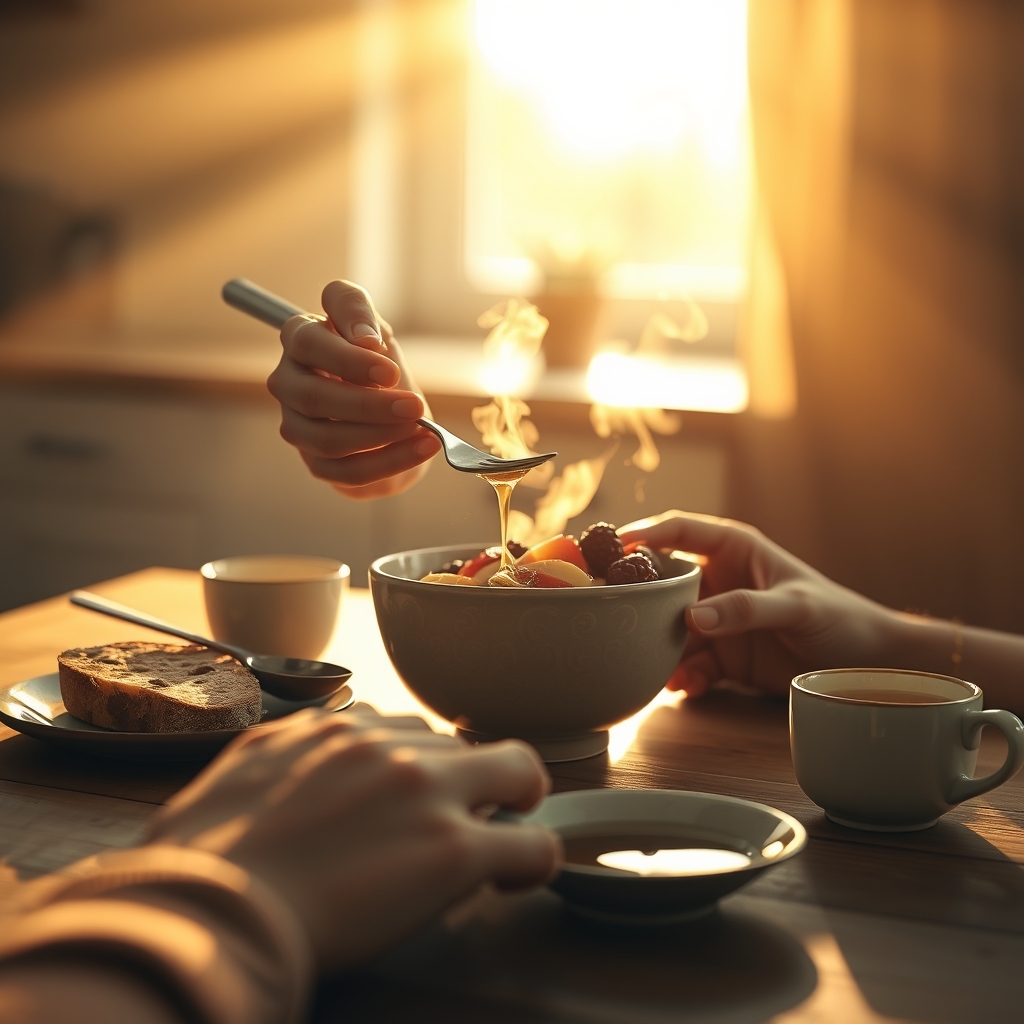
There’s a moment, just before the first bite, when everything is possibility. The fork hovers, the steam rises, and for a second, we’re not just eating—we’re participating in something sacred. But how often do we rush past that moment, lost in thought or distraction? The art of nourishment begins with pausing long enough to notice the weight of the fork in our hand, the scent of the food, the way our body leans in, anticipating.
I’ve started setting my table as if I’m expecting company, even when it’s just me. A cloth napkin, a candle, the good plates. Not for show, but for the way it slows me down. The way it turns a meal into a ritual. In those small acts of attention, something shifts. The food doesn’t just fill me; it connects me—to the hands that grew it, to the earth that cradled it, to the version of myself that remembers what it’s like to be truly hungry, truly satisfied.
The Paradox of Choice
We live in an age of abundance, yet so many of us feel starved. The grocery store aisles stretch endlessly, but our plates often feel empty. Why? Because choice without intention is just noise. It’s the difference between standing in a library, overwhelmed by books, and sitting down with one that speaks to you. Nourishment isn’t about having more options; it’s about choosing with clarity, with presence, with a willingness to say, “This is what I need right now.”
I’ve learned to ask myself, before every meal: What am I truly hungry for? Not just in my stomach, but in my bones, in my heart. Sometimes the answer is simplicity—a bowl of soup, a slice of bread. Other times, it’s something richer, more complex. The key isn’t to judge the answer, but to listen. To trust that the body knows, even when the mind is still catching up.
The Unseen Harvest
We talk about “eating clean” as if nourishment is a matter of purity, but what if it’s more about connection? The farmer who tended the soil, the hands that harvested the greens, the sun and rain that coaxed them from the earth. When we eat, we’re not just consuming calories; we’re taking in the labor of others, the generosity of the land. There’s a humility in that, a reminder that we’re part of something larger than ourselves.
I once spent a week at a farm, pulling carrots from the dirt, brushing off the soil, eating them raw in the field. They tasted like nothing I’d ever bought in a store—sweet, earthy, alive. That’s when I understood: nourishment isn’t just about what we put in our bodies, but how we receive it. With gratitude, with awareness, with a sense of wonder for the unseen hands that made it possible.
The next time you sit down to eat, try this: take a breath before the first bite. Not to count calories or macros, but to acknowledge the quiet miracle of it—the way food becomes you, cell by cell, moment by moment. The way it doesn’t just fill your stomach, but feeds the parts of you that hunger for meaning, for connection, for the simple, profound joy of being alive. And if you listen closely, you might hear your body whispering back, not in numbers, but in the language of longing and fulfillment, a dialogue as old as time itself.
You may also like
-
The Whispering Palette: How the Colors on Our Plates Paint the Canvas of Our Well-Being
-
The Breath Between Bites: How Nourishment Becomes a Sacred Pause in the Rush of Living
-
The Dance of Nourishment: How Each Choice Composes the Melody of Our Days
-
The Echoes of Nourishment: How the Food We Choose Resonates Through Time
-
The Alchemy of Attention: How the Hands That Feed Us Shape the Soul We Become