
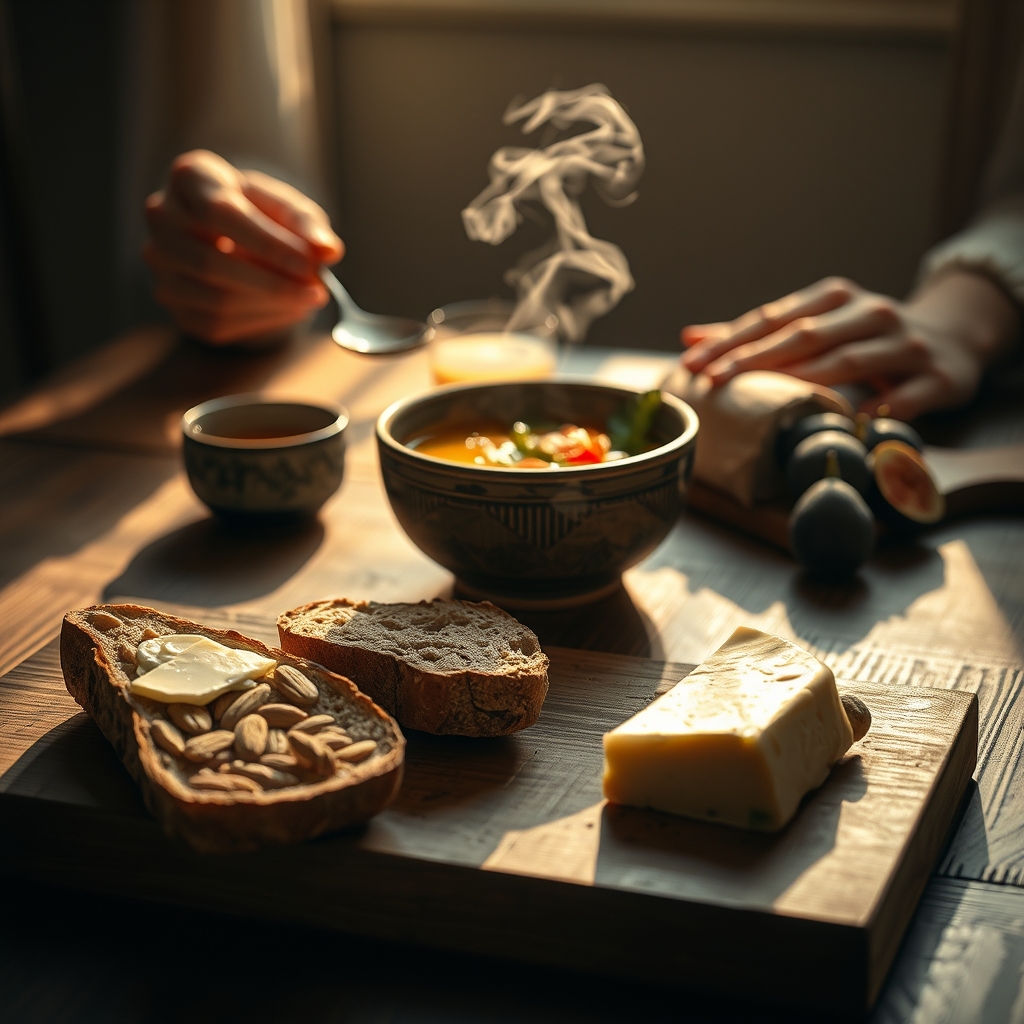
There is a moment, just before the first bite, when the world stills. The steam rises in delicate tendrils from a bowl of soup, the scent of garlic and thyme weaving through the air like a whispered promise. In that pause, food is not yet fuel—it is possibility. It is memory suspended in broth, sunlight trapped in the skin of an apple, the slow patience of soil and rain distilled into something we can hold. What if we learned to eat not just with our mouths, but with our whole attention? What if nutrition was less about rules and more about reverence?
The Body as a Landscape of Listening
We speak of the body as if it were a machine, something to be optimized, calibrated, fed the right inputs to produce the desired outputs. But the body is not a factory—it is a garden. It blooms and wilts, it thirsts, it bears fruit in its own time. The language of nutrition often forgets this. It reduces hunger to numbers, cravings to deficiencies, meals to mere transactions. Yet, when we slow down enough to listen, the body speaks in subtler tongues: the heaviness of a meal that sits like a stone, the lightness of greens that feel like forgiveness, the way a handful of almonds can quiet the mind as much as the stomach.
What if we approached eating as an act of dialogue? Not with rigid meal plans, but with curiosity—asking, What does this body need today? Some days, the answer is a salad, crisp and bright as a spring morning. Other days, it is the dense, buttery weight of avocado, or the slow comfort of oats simmered in cinnamon. The wisdom is not in the food itself, but in the space we create to hear the body’s response. Nutrition, then, becomes less about control and more about communion.
The Myth of Perfection and the Poetry of Imperfect Meals
We are bombarded with images of flawless plates: rainbow-colored Buddha bowls, smoothie jars layered like stained glass, meals so pristine they seem untouched by human hands. But real nourishment is rarely so photogenic. It is the scrambled eggs made in haste, the banana eaten in the car, the leftovers reheated with a sprinkle of cheese and a prayer. It is the way a child’s sandwich, cut into shapes, tastes better than any gourmet meal because it was made with love. The myth of the perfect diet is just that—a myth. It is a story we tell ourselves to avoid the messy, beautiful truth: that nourishment is not about perfection, but presence.
Consider the Japanese concept of wabi-sabi, the art of finding beauty in imperfection. A chipped bowl, a meal slightly overcooked, a day when the only vegetables in the fridge are wilted—these are not failures. They are the texture of a life fully lived. The most nourishing meals are not always the ones that follow the rules, but the ones that meet us where we are: tired, hungry, distracted, or joyful. They are the ones that remind us that food is not just about what we eat, but how we eat it.
The Soul’s Hunger: When Food is Not Enough
There is a kind of hunger that no meal can satisfy. It is the hollow ache of loneliness, the gnawing restlessness of a life lived in fragments, the quiet despair of a heart that has forgotten how to be still. We mistake this hunger for something physical, reaching for snacks when what we crave is connection, for sugar when what we need is silence. The body is wise, but it is not always precise. It speaks in metaphors, in cravings that are really cries for something deeper.
This is where nutrition tips often fall short. They tell us what to eat, but not why we eat. They offer solutions for the body, but not for the soul. Yet, the two are inseparable. A meal eaten in solitude, no matter how balanced, will never nourish as deeply as one shared with laughter. A salad eaten in haste will never satisfy like a slow-cooked stew savored with gratitude. The most powerful nutrition tip is not a list of superfoods, but a reminder: Eat slowly. Eat together. Eat with your hands. Eat with your heart open.
The Ritual of Feeding Ourselves
In a world that moves at the speed of light, the act of preparing a meal can feel like an act of rebellion. Chopping vegetables, stirring a pot, setting a table—these are not just tasks, but rituals. They are the small, daily ceremonies that remind us we are alive. There is a reason why so many cultures have traditions around food: the blessing before a meal, the sharing of bread, the passing of dishes. These rituals are not just about the food; they are about the act of being human.
When we rush through meals, we rush through life. But when we take the time to cook, to taste, to savor, we are not just feeding our bodies—we are feeding our souls. The kitchen becomes a sanctuary, the table a place of communion. Even the simplest meal, prepared with care, becomes a sacrament. This is the quiet alchemy of nourishment: the way food, when treated with reverence, can transform not just our bodies, but our entire way of being in the world.
The next time you sit down to eat, pause for a moment. Look at your plate not as a collection of nutrients, but as a story. The carrots, pulled from the earth by hands you will never meet. The olive oil, pressed from fruit that grew under a foreign sun. The spices, carried across oceans and centuries. Every meal is a tapestry of time and toil, of life and death and rebirth. To eat is to participate in this great cycle. It is not just about filling the stomach, but about honoring the sacredness of being alive. And perhaps, in that simple act, we find the nourishment we have been searching for all along.
You may also like
-
The Whispering Palette: How the Colors on Our Plates Paint the Canvas of Our Well-Being
-
The Hidden Dialogue: How Our Plates Speak in the Language of Longing and Fulfillment
-
The Breath Between Bites: How Nourishment Becomes a Sacred Pause in the Rush of Living
-
The Dance of Nourishment: How Each Choice Composes the Melody of Our Days
-
The Echoes of Nourishment: How the Food We Choose Resonates Through Time