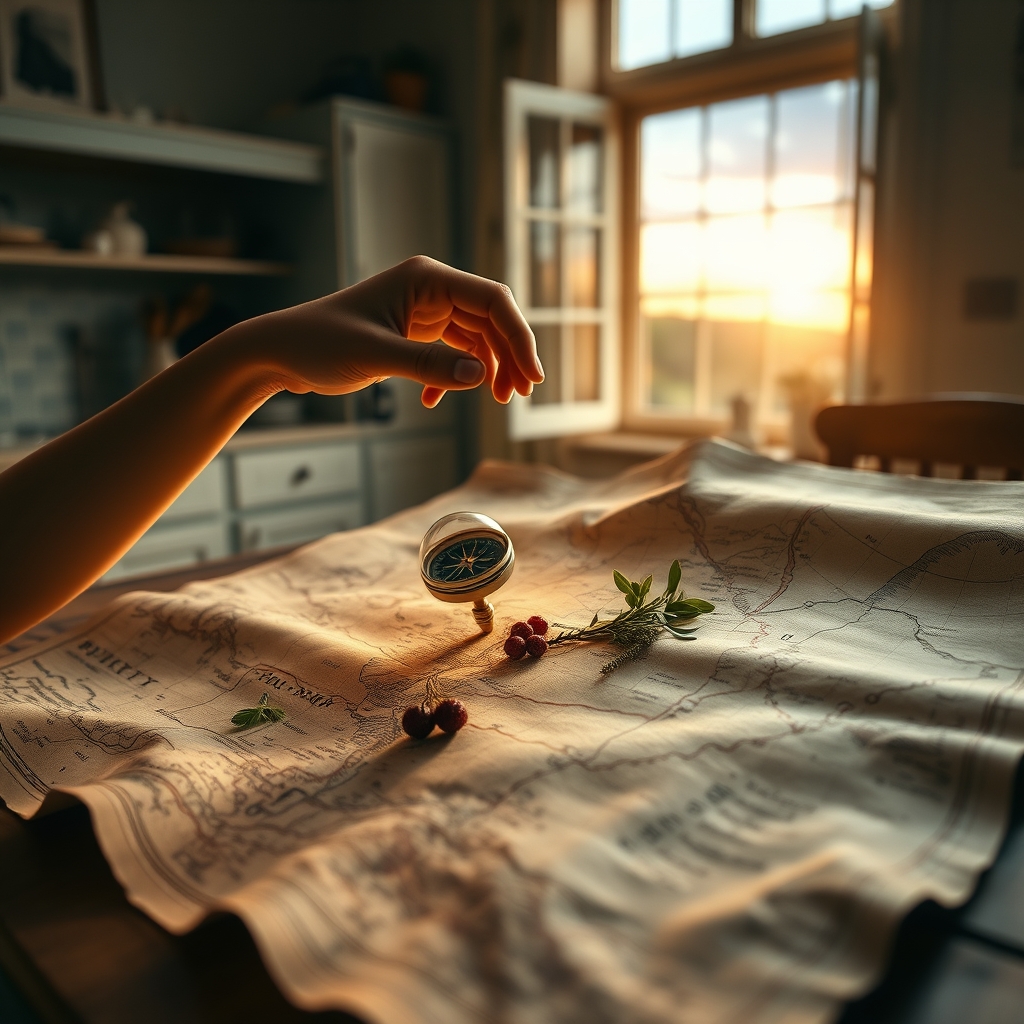
There is a quiet geography to the way we eat, a landscape as vast and uncharted as the night sky, yet as intimate as the lines on our palms. Each meal is a map, not of places, but of choices—some deliberate, others inherited, a few stumbled upon like hidden paths in an old forest. To nourish oneself is to navigate this terrain, to trace the contours of hunger and satiety, of craving and contentment, with the same care one might give to reading the stars.
The Compass of Intention
What does it mean to eat with intention? It is not merely the act of selecting an apple over a pastry, though that is part of it. Intention is the quiet voice that asks, What does my body need? before the louder one demands, What do I want? It is the pause between the first bite and the second, the moment where the mind checks in with the body, like a traveler consulting a compass to ensure they are still heading north. This practice is not about restriction, but about awareness—a way of honoring the body’s signals rather than drowning them out with the noise of habit or distraction.
Yet intention is fragile. It can be derailed by the siren call of convenience, the seduction of a brightly packaged promise, or the weight of a day so heavy that the easiest path seems the only one. How many times have we reached for something not because we were hungry, but because we were tired, or lonely, or simply because it was there? The map of nourishment is not just about the destinations we choose, but the detours we take without realizing it.
The Rivers of Memory
Food is never just fuel. It is memory, too. The scent of garlic sizzling in olive oil might transport you to your grandmother’s kitchen, where the air was thick with the warmth of stories and the clatter of pots. The first sip of chai on a cold morning could carry you back to a café in a city you visited once, where the steam from your cup curled into the air like a question you never answered. These rivers of memory run through every meal, shaping our preferences, our aversions, our deepest comforts.
But memory is a double-edged sword. It can lead us back to the foods that once nourished us in ways beyond the physical, or it can trap us in cycles of eating that no longer serve us. The challenge is to sift through these memories with kindness, to recognize which ones are guiding us toward health and which are keeping us tethered to the past. To nourish ourselves well is to acknowledge these currents without letting them sweep us away.
The Topography of Balance
Balance is not a fixed point on the map, but a shifting horizon. It is the art of knowing when to indulge and when to abstain, when to feast and when to fast, when to listen to the body’s whispers and when to ignore its fleeting demands. It is the understanding that no single food holds the key to health, just as no single meal can undo it. Balance is the recognition that nourishment is not a straight line, but a spiral—sometimes we circle back to old habits, but each time, we do so with a little more wisdom, a little more grace.
This is not the balance of rigid rules or strict proportions, but the balance of intuition. It is the quiet confidence that comes from knowing your body’s language, from recognizing the difference between hunger and habit, between fullness and discomfort. It is the trust that you can enjoy a slice of cake without guilt, just as you can choose a salad without virtue. Balance is not about perfection, but about presence—the willingness to meet yourself where you are, meal by meal, day by day.
The Hidden Valleys of Hunger
Not all hunger is physical. There is a hunger of the heart, a longing that no amount of food can satisfy. It is the emptiness that lingers after a meal, the restlessness that drives us to the fridge long after our stomachs are full. This is the hunger that asks for connection, for meaning, for something more than what can be found on a plate. To nourish ourselves fully is to learn to recognize these hidden valleys, to understand that sometimes the body is not asking for food, but for something deeper.
This is where the map of nourishment becomes more complex. It is no longer just about what we eat, but why we eat. It is about the conversations we have over meals, the hands we hold while cooking, the silence we share with ourselves as we sit down to eat. It is about the way food can be a bridge to others, a way of saying I see you or I am here with you. And it is about the way it can also be a barrier, a way of numbing, of hiding, of keeping the world at a distance.
The Unmarked Trails
Perhaps the most beautiful thing about the map of nourishment is that it is never complete. There are always new trails to explore, new flavors to discover, new ways of feeding ourselves that we have yet to imagine. The act of eating is not static; it is a living, breathing thing, shaped by culture, by science, by the seasons, by the slow accumulation of our own experiences. To nourish ourselves is to embrace this ever-changing landscape, to approach it with curiosity rather than fear, with openness rather than dogma.
And so, we return to the quiet geography of our plates, to the choices that shape our days and, in turn, our lives. The map is not fixed, nor is it ours alone. It is shared with every person who has ever grown, cooked, or eaten a meal, with every tradition passed down through generations, with every innovation that has yet to be born. To nourish ourselves is to add our own lines to this map, to leave our mark not just on the food we eat, but on the way we choose to live.
The next time you sit down to a meal, take a moment to trace the contours of your own map. Notice the paths you’ve walked before, the ones you’re walking now, and the ones you might explore tomorrow. There is no right way to navigate this terrain, only the way that feels true to you. And perhaps, in that quiet act of attention, you’ll find that the journey itself is the nourishment you’ve been seeking all along.
You may also like
-
The Whispering Palette: How the Colors on Our Plates Paint the Canvas of Our Well-Being
-
The Hidden Dialogue: How Our Plates Speak in the Language of Longing and Fulfillment
-
The Breath Between Bites: How Nourishment Becomes a Sacred Pause in the Rush of Living
-
The Dance of Nourishment: How Each Choice Composes the Melody of Our Days
-
The Echoes of Nourishment: How the Food We Choose Resonates Through Time